Benchmarks
Build SWE-bench-style benchmarks from your own repositories and compare models and harnesses on tasks that reflect your actual codebase.
How It Works
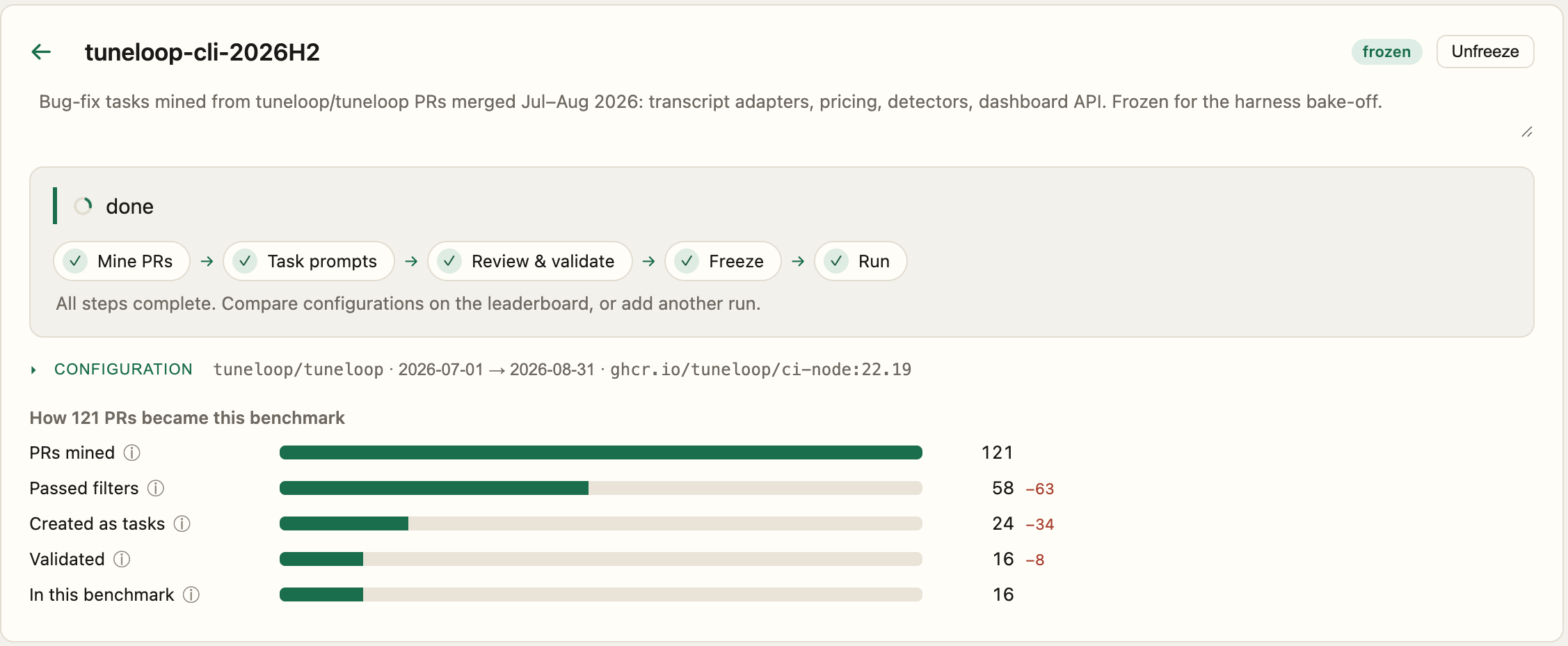
- Mine — Tuneloop scans your merged PR history and identifies PRs suitable as benchmark tasks. For each task, Tuneloop creates a prompt based on the linked ticket, existing session transcript, or the PR description.
- Validate — Each candidate is validated: can the change be cleanly reverted, and does the test suite pass? Tasks that fail validation are filtered out.
- Benchmark — Run any combination of model and harness against the validated tasks. Tuneloop handles the infra to run each task in an isolated container and report metrics.
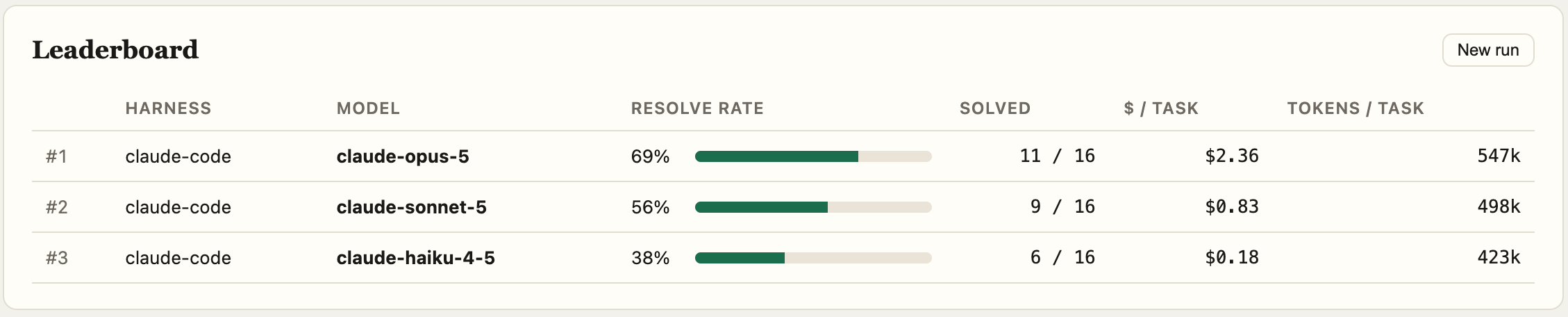
Leaderboard
Results show per-model/harness performance:
- Resolve rate — what percentage of tasks the agent solved
- Cost per task — average spend per attempt
- Token usage — input/output token counts
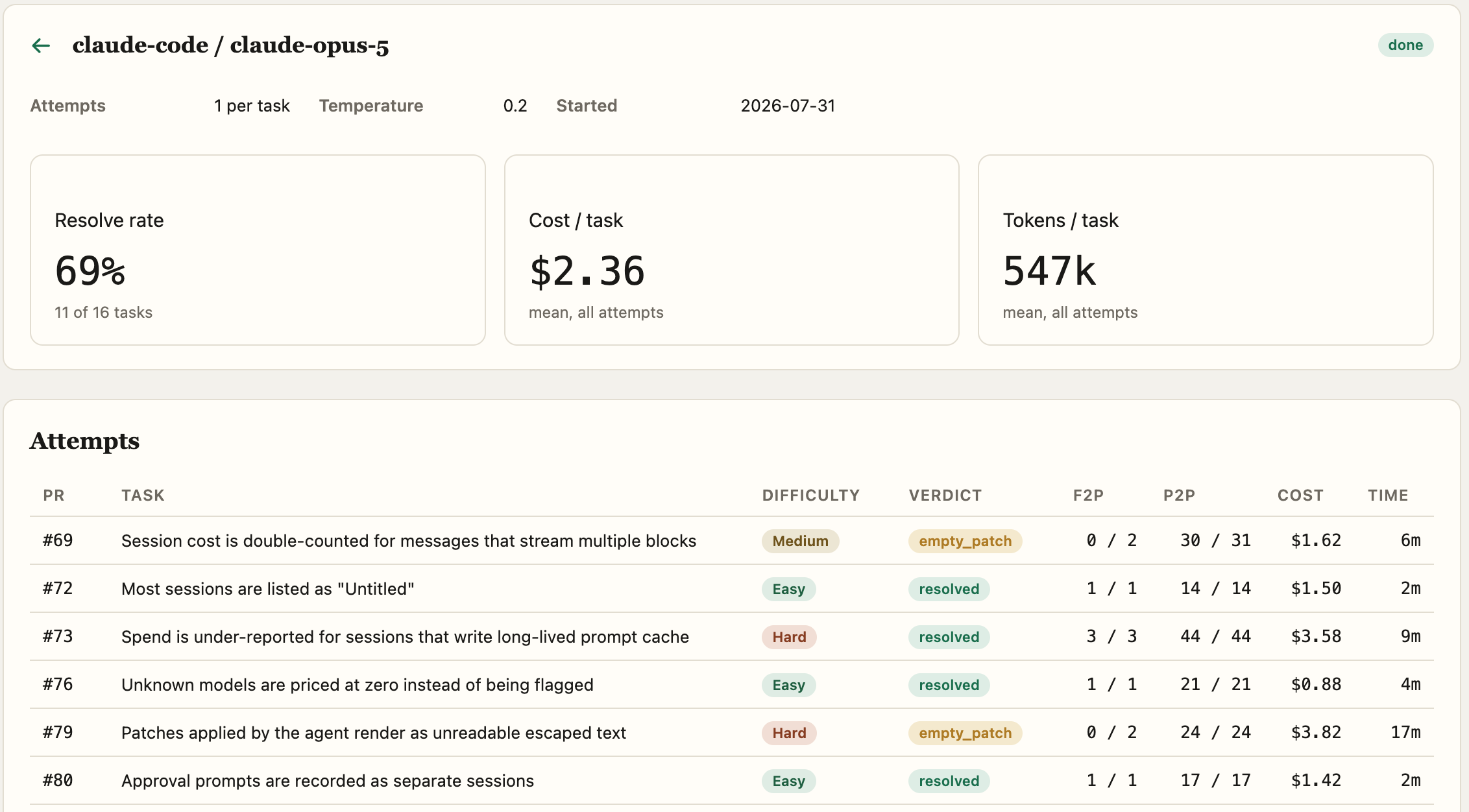
Drill into any configuration to see per-task results, including difficulty, verdict, file and patch accuracy, cost, and time.
Use Cases
- Model selection: before committing to a model upgrade, compare resolve rates on your own code
- Harness evaluation: test whether switching from one agent framework to another improves outcomes
- Cost optimization: find the cheapest model that meets your quality bar
Requirements
Benchmarks require the runner service, which needs Docker socket access to spin up isolated containers. See Docker Compose or Helm Charts for setup.